

Recently, in English language teaching, the idea of teaching culture and raising (inter)cultural awareness/competence has gained importance. For that reason, terms such as sociolinguistics competence, and intercultural communicative competence proposed by Byram (1997) are used frequently in EFL/ESL settings. As the title suggests, in this article I will briefly mention what culture is and its relation with language teaching, and how we as English teachers can raise (inter)cultural awareness in our classroom. Finally, I will provide some practical ideas to improve the (inter)cultural competence of language learners.
What is culture?
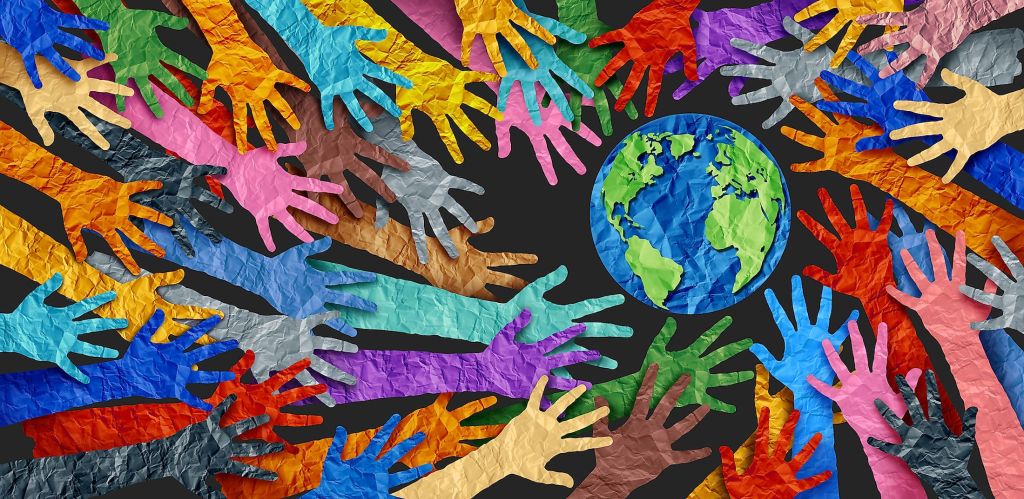
Before delving into the integration of culture in EFL classes, the concept of culture should be defined. Culture is defined as “the shared repertoires of values, beliefs, and experiences that a group of people use for understanding and engaging with the world around them” (Decapua,2018 p.1).In other words, it can be defined as the social norms, beliefs, values, and products (i.e., foods, clothes, traditional dances) of a particular community. In addition, there are some elements of culture called practices, perspectives, and products – also called as 3P s of culture (Frank,2013). Practices can be defined as the way that members of a community interact and communicate with each other. Perspectives, on the other hand, are related to the feelings, values, and beliefs of the members of a culture. Finally, products are the things that the members of a community create and pass down to the other generations – such as foods, clothes, and dances (Frank, 2013). These concepts also fall into two categories as Big C and Small C (Kramsch, 2013). While the former refers to products, the latter is related to perspectives and practices.
The relationship between culture and ELT
Teaching a language without including its culture is nearly impossible as culture and language are strongly bonded. As language is a social phenomenon, “it is strongly affected by the social contexts in which we see, hear and experience even though we do things with words” (Kavaklı,2020 p.95-111). To put it differently, the social context where a language is used influences the way it is organized, used and shaped. It even affects the choice of the lexicon and grammar structure. Keeping all these in mind, when it comes to the relationship of culture with English language teaching, it can be stated that culture is an indispensable part of the language learning teaching/learning process. Firstly, the language teacher himself should be equipped with the essential knowledge and skills with regard to the language learning process (i.e., how language is processed, and organized, the influence of native language and culture on the use of L2). When it comes to language learners, the concept called communicative competence presented by Hymes (1972) comes into play. It encompasses discourse competence, strategic competence, grammatical competence, and finally sociolinguistic competence. As our topic is concerned, in English language classes, the learners should also have sociolinguistic competence, which means that they are supposed to know not only the formal qualities but also the use of the target language in a certain social context, and they are supposed to know how to use the language appropriate to social variables such as age, gender, status, etc.
The Ways of Raising (Inter)Cultural Awareness
Cultural Iceberg (Frank, 2013):
As mentioned above, we can divide culture into categories such as Big C and Small C. In order to help our students to gain awareness of this concept, this kind of task presented by Frank (2013) can be used. Firstly, the teacher gives the students a worksheet on which there is an iceberg. Afterward, the students are supposed to find the products that belong to their own (local) culture because it is more effective to move from known to unknown. As Bayyurt (2016) stated, “Students’ local culture and other countries’ cultures must be featured in the learning process.” In the meantime, the teacher can display some examples such as foods, and clothes in the UK or in other countries as English is now the lingua franca and international means of communication. After they discuss surface culture, it is time for them to talk about the most important aspect of culture, subsurface culture. The teacher can encourage the students to talk about their own thoughts, beliefs, and values, and how they use non-verbal language. As in the previous one, the teacher can bring some examples to make them recognize the hidden aspects of society and how they use verbal and non-verbal language.

Role-Play
Role-play activities are one of the influential ways to integrate culture and promote critical cultural awareness. Experiential learning comes into play in this part as the learners learn by doing. For example, the teacher may want the students to act out a dialogue where a communication breakdown occurs. While they are acting it out, the other students can make them stop and they can discuss the problems in that dialogue (Frank, 2013). This in return fosters critical thinking. The other task can be assigned by the teacher. That is, the students can be assigned to certain countries to do research. In the next lesson, they can behave as if they are from that country and they can even imitate the accent and the body language that is specific to that culture. In this way, the students will learn how to behave and how to use the language in a real encounter. Therefore, it can also be called simulation.
Integration of Technology
With the advancements in technology, humans can access millions of information. Besides, newly developed technologies such as culture and language exchange sites can be influential when teaching culture. Especially, social media sites are now being used globally by a staggering number of 7.7 billion and it means that social media is used by one in three people in the world – these statistics belong to 2019 (Ortiz-Ospina, 2019). For that reason, it is one of the most important tools that a language teacher can use. However, the question is how can we integrate it into our classes, and what is its relation with culture? For example, TikTok is one of the apps and it includes a wide range of language content. Besides, some people record short videos regarding their cultural practices or their experiences in another culture. These videos can be added to English language classes.
In addition, WebQuests can be used while teaching culture (Yılmaz, 2020). That is, the learners can be assigned some questions and do research on the web. In the next lesson, they can present their findings and discuss them. The questions can be related to the traditional dishes and holidays of a certain country. However, it does not mean that an English teacher can integrate the cultures of The USA or The UK. As English is now considered a lingua franca, it is possible to integrate a wide range of cultures.
Culture Assimilators
Culture assimilators were developed by Fiedler, Mitchel, and Triandis (1971). They are defined as learning experiences where learners are exposed to the customs, behaviors, and attitudes of other cultures (Fiedler, Mitchel, and Triandis, 1971). They are also seen as one of the most useful and functional techniques to be used in foreign language classes (Yılmaz, 2020).
In general, culture assimilators include some incidents where communication
breakdowns occur because of cultural differences. Students are introduced to
incidents with 4 or 5 options that are the possible interpretations of the problem
raised during the communication. For example, the encounter of two people can be
given. One of them gives importance to being punctual while the other one does not
care much about the allocated time because of the cultural values that each one has.
A scenario can be created where a student from a certain culture, which does not give much attention to be punctual, is always late for meetings and has a problem communicating with the teacher regarding that situation. Following that, interpretations of this situation regarding the reasons for the student being late can be provided. The students are supposed to choose the most appropriate interpretation of the breakdown. In this way, they get an insight into the differences in other cultures and some issues that arose because of them. They can also interpret
the different perspectives which belong to a certain culture. Besides, by interpreting
the problem and its result, they manage to come up with different strategies to be
used during the communication.
These are some of the techniques and ways to increase (inter)cultural awareness of language learners. As language teachers and teachers to be, we should have this awareness first so that we can equip our students with the essential skills and knowledge regarding the use of the language (English) appropriately and suitable for the given culture/social context.
References
Bayyurt, Y. (2016). Current perspectives on sociolinguistics and English language education. The Journal of Language Learning and Teaching, 3 (1), 69-78
Byram, M. (1997). Teaching and Assessing Intercultural Communicative Competence. Clevedon, UK: Multilingual Matters.
DeCapua, Andrea. (2018). Culture Myths: Applying Second Language Research to Classroom Teaching. 10.3998/mpub.9558044.
Fiedler, Fred & Mitchell, Terence & Triandis, Harry. (1971). The Culture Assimilator: An Approach to Cross-Cultural Training. Journal of Applied Psychology. 55. 95-102. 10.1037/h0030704.
Frank, J. (2013). Raising Cultural Awareness in the English Language Classroom.
Kramsch, C.J. (2013). Culture in Foreign Language Teaching.
Kavaklı, N (2020). The Relationship Between Language and Culture, and Its Implications for EFL Teaching. In S. Çelik and E. Solak (Eds.), World Englished and Culture in English as a Foreign Language (EFL) Education (p. 95-111).
Hymes, D. (1972). On Communicative Competence. In J. Pride, & J. Holmes (Eds.), Sociolinguistics (pp. 269-285). Harmondsworth: Penguin Books.
Yılmaz, A. (2020). Techniques and Activities to Teach Culture in the Foreign Language Classroom. In S. Çelik and E. Solak (Eds.), World Englished and Culture in English as a Foreign Language (EFL) Education (p. 179-199).
Ortiz-Ospina, E. (2019). The Use of Social Media. https://ourworldindata.org/rise-of-social-media#licence
 Teaching and Learning English